"People aren't buying because they can't afford the house," says Monique Hroncich, a licensed agent with The Huneycutt Group in Wilmington, in an interview with WilmingtonBiz. "They can't afford the insurance."
In her spring 2026 interview with WilmingtonBiz, Hroncich described a recurring pattern: she fields calls from prospective buyers multiple times a week. Someone has already run the mortgage numbers. They know their rate, their monthly principal and interest, their comfortable price ceiling. Then they call for an insurance quote on a specific address, and the math they built collapses. In the months leading up to that interview, she watched several of those buyers walk away from purchases entirely, not because the house failed inspection or the appraisal came in low, but because the premium alone reset what the house actually costs to own.
That is the part of the Wilmington market that a median sale price cannot show you. Buyers moving here from other states are trained to think of affordability as a mortgage problem: rate, term, down payment. In coastal New Hanover County as of August 2026, the insurance quote has quietly become the first real gate a purchase has to pass through, and it behaves nothing like a mortgage payment. It does not move in a straight line with home price. It does not track neatly by neighborhood reputation. And it just finished absorbing a two-year increase that was set in motion before most current buyers started their search.
A number that moved before you started looking
The rate increases hitting New Hanover County right now were not a surprise policy shift. They were negotiated in January 2025, when, according to the North Carolina Department of Insurance, North Carolina Insurance Commissioner Mike Causey settled a year-long dispute with the North Carolina Rate Bureau, which had originally asked for a statewide average increase of 42.2 percent, with some coastal territories facing proposed hikes as high as 99.4 percent. Causey's settlement brought the statewide base rate increase down to 7.5 percent in June 2025 and another 7.5 percent in June 2026, and it locked in a rule that the Rate Bureau cannot file for another increase before June 2027.
Coastal counties did not get the statewide number. New Hanover County's beach territories absorbed a steeper path: a 16 percent increase that took effect June 1, 2025, and a 15.9 percent increase that took effect June 1, 2026, as NC Newsline reported. Those increases are now both fully in effect as of this summer, on top of whatever base premium a homeowner was already paying. For a buyer comparing a listing today against a comparable sale from two years ago, the insurance line on the closing worksheet has already moved independently of the price the seller is asking. The one piece of certainty buyers do have is that the Rate Bureau cannot file for another increase before June 2027, so these specific increases are not going anywhere for the moment.
Why the county average hides more than it reveals
Wilmington real estate marketing tends to lean on one citywide or countywide insurance figure, the way it leans on one median sale price. Both numbers flatten a market that does not actually behave uniformly.
Within Wilmington's own ZIP codes, published premium comparisons show a spread wide enough to change which house a buyer can afford to close on, even at an identical purchase price. One widely cited ZIP-level comparison puts the least expensive Wilmington ZIP code, 28403, at an average annual premium of $1,520, against the most expensive, 28408, at $7,120. That is not a rounding difference. It is the gap between an insurance bill that barely registers in a monthly budget and one that rivals a car payment, for two properties that might sit inside the same city limit sign.
| Wilmington ZIP code | Reported average annual premium |
|---|---|
| 28403 | $1,520 |
| 28408 | $7,120 |
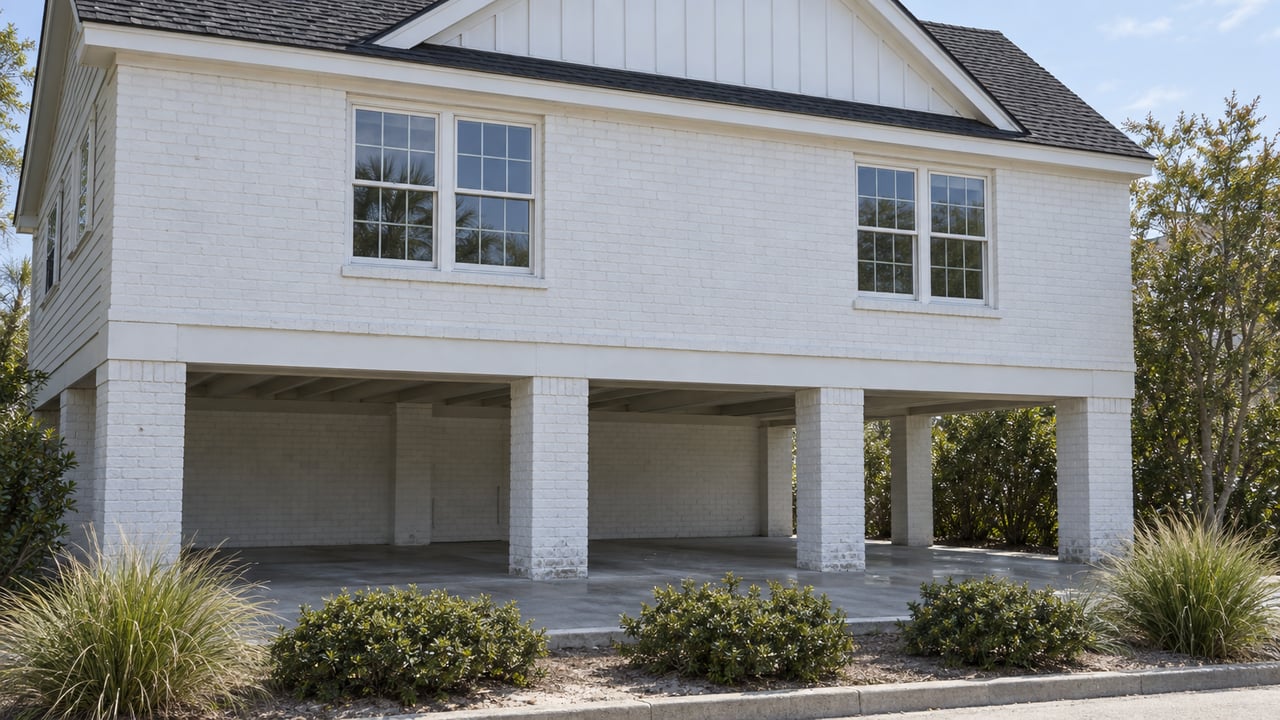
The spread exists because premiums are underwritten property by property. Distance from the Intracoastal Waterway, elevation, roof age, construction year, and whether a home falls inside a coastal wind pool all factor in before a carrier quotes a number. Two homes listed ten minutes apart can land on opposite ends of that range. A buyer who anchors their budget to a citywide average is planning around a number that may not describe either property they are actually considering.
The policy structure nobody mentions until the offer is written
Part of what makes Wilmington's insurance math different from an inland market is structural, not just pricier. Standard homeowners policies in North Carolina's 18 designated coastal counties, New Hanover included, typically exclude wind and hail damage from the base policy. To cover that gap, homeowners buy a separate policy, most often through the North Carolina Insurance Underwriting Association, known locally as the Coastal Property Insurance Pool, which functions as the insurer of last resort for wind and hail risk in these counties.
In practice, that means a Wilmington buyer is not comparing one insurance quote against one mortgage payment. They are frequently assembling two or three policies (a standard homeowners policy, a wind and hail policy, and in many cases a separate flood policy) before they know their true monthly cost of ownership. Each of those has its own underwriting, its own renewal cycle, and its own exposure to the rate increases working through the system now. A buyer who only prices the first policy and assumes the rest will be similar is the buyer Hroncich describes calling back a few weeks later to say the numbers no longer work.
This is also not an isolated carrier tightening its own belt. In 2024, Nationwide notified North Carolina regulators it would not renew more than 10,000 homeowners policies statewide, with more than half of those non-renewals concentrated in coastal areas. That kind of shift changes which carriers are even quoting a given property, sometimes mid-search.
The one move that protects your due diligence money
According to Robinoffer, North Carolina's standard purchase contract gives buyers a due diligence period, commonly 14 days. The due diligence fee itself, paid directly to the seller, is generally not refundable. That distinction matters more in Wilmington than it does inland, because insurance is one of the few due diligence items that can change entirely based on a single address, and it is one of the few items a buyer can check before they are financially exposed at all.
A practical sequence for a Wilmington purchase looks like this:
- Before writing an offer, call a local agent with the specific property address and ask for a preliminary homeowners and wind and hail quote. Most agents can turn this around within a day.
- If the quote is workable, submit the offer and begin the standard due diligence steps: general inspection, termite inspection, and title search.
- Within the first few days of the due diligence period, request a full, bindable quote rather than a preliminary estimate, since underwriting can adjust the number once the carrier reviews roof age, prior claims, or elevation certificates.
- If the bindable quote changes the math meaningfully, use the remaining days of due diligence to decide whether the purchase still works, rather than discovering the number after the fee is already gone.
Buyers who treat the insurance quote as a pre-offer question, not a post-contract surprise, are the ones who keep their due diligence fee working for them instead of against them.
What this means for a Wilmington search
None of this argues against buying here. It argues against pricing a Wilmington purchase the way a buyer would price a home in a market without a coastal wind pool, a due diligence deadline, or a rate settlement whose scheduled increases just finished taking effect this summer. The mortgage payment is the number every listing portal shows. The insurance quote is the number that actually decides whether that mortgage payment is the whole story, and it is worth getting early enough that it changes your search instead of ending it.
FAQ
Does every home in Wilmington need a separate wind and hail policy? Homes in New Hanover County and the other 17 designated coastal counties typically need one, since standard policies commonly exclude wind and hail coverage in this region. Confirming this during a pre-offer insurance call, rather than assuming standard coverage applies, avoids a mid-contract surprise.
Are Wilmington insurance rates still rising right now? The negotiated settlement's two increases, 16 percent effective June 2025 and 15.9 percent effective June 2026 for New Hanover County's beach territories, have both already taken effect as of this summer. The agreement bars the North Carolina Rate Bureau from filing for another increase before June 2027, so the number a buyer sees today should hold rather than climb further in the near term.
Is a preliminary insurance quote the same as a bindable one? No. A preliminary quote is useful for screening a property before writing an offer, but a bindable quote requires the carrier to review specifics like roof age, prior claims history, and elevation certificates. Treat the preliminary number as a filter and the bindable number as the one that belongs in your closing budget.
If you are comparing Wilmington neighborhoods and want a clearer read on what a specific property's true carrying cost looks like before you write an offer, Angela Drum can walk through the numbers with you and connect you with local resources built for this market. Request a complimentary market strategy and home valuation to start with a full picture, not just a mortgage estimate.
This article is general information, not legal, tax or financial advice. Consult a qualified professional about your situation.