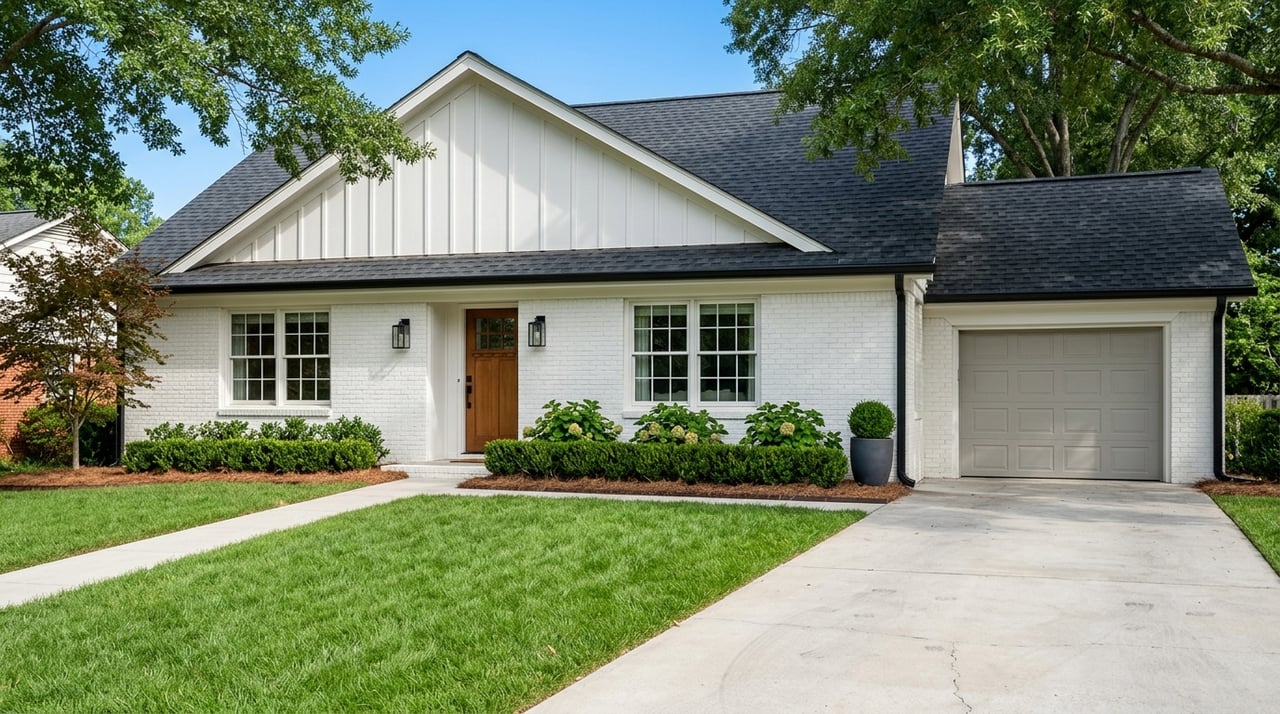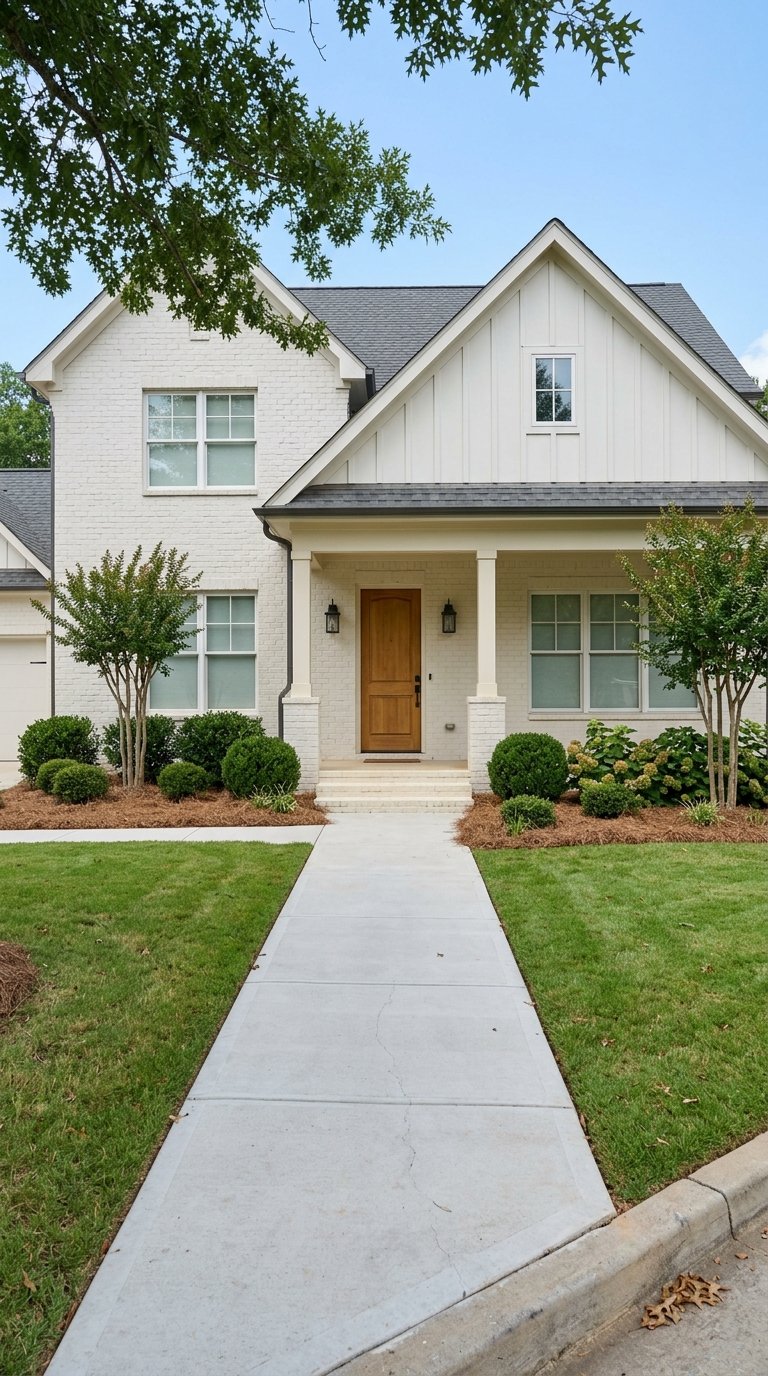
A relocating buyer flying in from Northern Virginia last month wrote an offer on a Five Points bungalow at $8,000 over list. She lost. The winning buyer matched her price, matched her earnest money, and put $12,000 on the line as a nonrefundable due diligence fee payable to the seller the day the contract was signed. Her agent had told her the Raleigh median was around $425,000. That number had almost nothing to do with why she lost the house.
The citywide median is the first number every relocator sees. It is also the least useful number in the file. Raleigh in 2026 is not one market with one median. It is three markets moving in different directions, layered on top of a state-specific contract mechanism that quietly transfers thousands of dollars from buyer to seller before an inspector ever walks the property. Understanding what the median hides is the difference between writing an offer that clears and writing one that funds someone else's closing.
The median is a weighted average of three unrelated markets
Look at the top-line numbers first, then look under them. FRED's Realtor.com series put the Raleigh CBSA median list price at $457,000 in June 2026. Redfin's rolling three-month window ending May 2026 showed a median sale price of $425,000, down 2.4% year over year, with homes going pending in about 34 days. Homes.com pegged April 2026 at $445,000 with year-over-year growth of just 0.3%, a sharp deceleration from the 25.6% surge the same market recorded in 2022.
Those figures look consistent. Break them apart by price bracket and they stop being one market. Homes.com's April 2026 breakdown showed condo sales up 41.9% year over year while single-family volume grew 6.2%. The single-family median actually fell $9,000 to $476,000 while the condo median rose 30.8%. Entry-level homes under $350,000 in Garner, Knightdale, and East Raleigh are still drawing multiple offers within a week per early-2026 Triangle brokerage reporting, while the $700,000-plus segment carries the longest days on market and the most inventory in the metro.
| Bracket | Behavior in early-to-mid 2026 | Practical read |
|---|---|---|
| Under $350K | Multiple offers, first-week decisions, appreciation ~4–5% | Prepare to compete on terms, not just price |
| $350K–$550K | Roughly 30 days to pending, appreciation ~2–3% | The bracket the "median" actually describes |
| $700K+ | Longest DOM, most inventory, sharpest pricing required | Bring a strategy, not a number |
A buyer shopping in one of these three brackets is buying in a different Raleigh than a buyer shopping in another. Averaging them produces the headline. It does not describe any actual transaction.
ZIP 27608 and ZIP 27610 are not in the same city, statistically
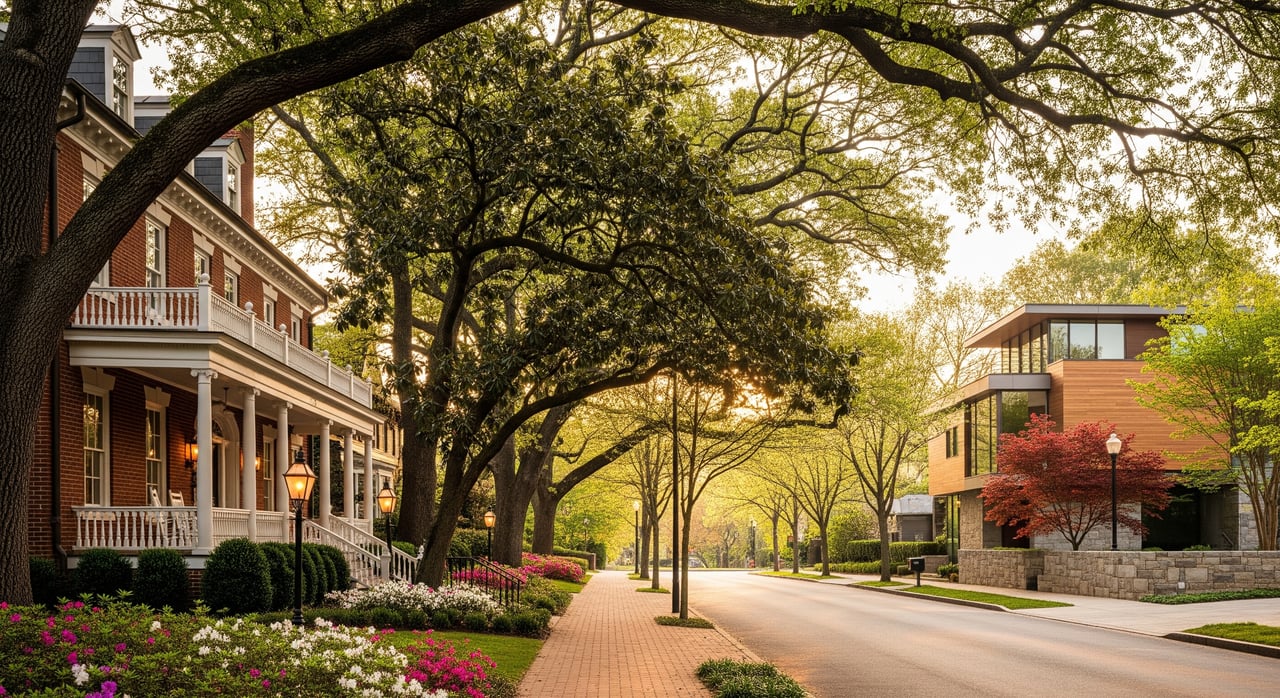
The bracket split is amplified by geography. HousingData.report's March 2026 analysis of 15 Raleigh ZIP codes found 27608, which covers Hayes Barton and much of Five Points, at over $1 million, nearly double the next most expensive ZIP and more than three times the cheapest. ZIP 27610 in southeast Raleigh came in at $316,459, roughly 39% below the citywide median. Opendoor's early-2026 neighborhood snapshot lined up with that spread: Five Points and Hayes Barton around $900K, Mordecai near $858K, North Hills around $823K, Historic Oakwood near $780K, Boylan Heights near $620K.
The neighborhood-level dispersion is the mechanism. When one ZIP sits at a million and another at three hundred thousand, the metro median tells you where the middle of the distribution falls, not where any specific house does. A buyer targeting a renovated cottage in Mordecai and a buyer targeting a new-build in a Wake County outlying submarket are both "buying at the Raleigh median" in headline terms and are experiencing entirely different transactions. The Five Points buyer is competing against a thin pipeline of long-tenured owners whose behavior AD Mortgage's March 2026 neighborhood report described as a "forever home" pattern, which keeps inventory permanently constrained and prices sticky on the way down. The southeast Raleigh buyer is negotiating against sellers who are increasingly willing to credit closing costs.
The second price the portals do not show you
The number that decided the Five Points contract at the top of this post is not on Zillow, not on Redfin, and not in any FRED series. It is the due diligence fee, and it is the closest thing Raleigh has to a hidden second sale price.
Under Form 2-T, the standard Offer to Purchase and Contract established by the North Carolina Association of REALTORS and the North Carolina Real Estate Commission, the buyer pays the seller a negotiated fee directly at contract execution in exchange for the exclusive right to inspect and terminate. The North Carolina Real Estate Commission's own bulletin on the subject is explicit: the fee is nonrefundable in most termination scenarios and is retained by the seller regardless of whether the transaction closes. It is credited toward the purchase price only if the buyer proceeds to closing. You can read the Commission's guidance directly at bulletins.ncrec.gov.
The size of that fee has moved with the market in ways the headline median obscures. During the 2021–2023 frenzy, competitive Triangle listings drew due diligence fees of $20,000 to $50,000, with some outliers higher. In 2026 the number has moderated sharply. Recent Raleigh, Cary, and Apex transactions on mid-range properties now commonly settle at $500 to $5,000, with $2,000 to $10,000 the working range on well-priced homes in desirable ZIPs where multiple offers are still routine. On a $425,000 house, the difference between offering a $1,000 fee and a $10,000 fee is not price. It is which offer the seller signs.
This is the friction relocating buyers from Virginia, Florida, New York, and Texas do not see coming. They arrive expecting an earnest money system where deposits sit in escrow and come back if the inspection turns up problems. That system does not exist here. Form 2-T creates a two-deposit structure in which one deposit, the earnest money, behaves the way they expect, and the other, the due diligence fee, leaves their account permanently the moment ink hits paper. A buyer who structures an offer without understanding that distinction is not making a mistake at the margin. They are misreading the contract at its foundation.
What "balanced" actually looks like at the closing table
The balance the WRAL 5 On Your Side report from March 2026 described is real, and the numbers Wake County saw in January 2026 back it up: Triangle MLS data showed 3,528 active listings, 20.9% more than the year before, a median price of $450,000 down 4.3% year over year, and median days on market at 46, up 24.3%. Opendoor's early-2026 Raleigh summary put months of supply at 4.6, up 26.5% year over year, and sale-to-list at 97.9%.
The number in that stack that changes offer strategy is the concession rate. Opendoor reported that 47% of early-2026 resale closings in the market carried financial concessions. In a $425,000 transaction, a seller-funded rate buydown or a $10,000 closing credit is worth substantially more to a buyer than shaving a few thousand off list. The market has quietly moved from a price negotiation to a terms negotiation, and the median does not register the shift because concessions do not touch the recorded sale price.
How to read the market for the transaction you are actually in
A few honest reads for a buyer or seller sitting inside the Raleigh number:
- Ignore the citywide median. Ask your agent for the median in your target ZIP and price band for the last 60 days. That is your comp set.
- In brackets where inventory is up, ask for a seller-funded rate buydown or a closing credit before you argue price. The concession is worth more than the equivalent price cut and it does not follow you into future appraisals.
- In brackets where multiple offers persist, budget the due diligence fee as a real cost of acquisition. Underwrite your loan first so the fee is not a bet you cannot afford to lose.
- If you are selling in the $700K-plus segment, price for the market that exists in July 2026, not the one that existed in June 2022. Homes.com pegged the metro peak at $459,800 in June 2025, and luxury has softened from there.
FAQ
Is Raleigh a buyer's market or a seller's market in 2026? Neither, uniformly. Triangle MLS data through early 2026 placed Wake County near the neutral 4-to-6-month supply threshold, and local brokers quoted in WRAL's March 2026 coverage described submarkets simultaneously running multiple offers and sitting for months. The label depends on your bracket and ZIP, not the metro.
Can I get the due diligence fee back if the inspection is bad? Almost never. The North Carolina Real Estate Commission's guidance under Form 2-T retains the fee with the seller in most termination scenarios. The narrow exceptions involve seller material breach or property damage before closing.
Why is the Raleigh median falling if prices in Hayes Barton and North Hills are still rising? Because the median is a mix. When inventory grows fastest in the segments that were already softening, the composite number drops even if the top and bottom brackets are stable or appreciating. Homes.com's April 2026 data showed the metro median down while condo prices rose 30.8% year over year in the same window.
If you are relocating to Raleigh, moving up within it, or preparing to list in a bracket that is no longer behaving the way the headlines suggest, the team at Angela Drum Team Realtors can pull the ZIP-level comps, model the due diligence exposure for your specific offer, and structure terms that match the market you are actually transacting in. Request a complimentary market strategy and home valuation to start with numbers that describe your house, not the metro.